How a Neighbourhood Gymnasium Makes Shared Space Work
A neighbourhood gymnasium can host games, dance, and community gatherings. Learn how to read its floor, equipment, and room setup before you visit.
What can you do in a neighbourhood gymnasium when the floor is marked for several sports and the room is set up for something else? A neighbourhood gymnasium is a shared indoor space whose layout and equipment change with each activity. Its design is often simple, but the way people arrange it can support games, rehearsals, classes, and gatherings.
Space beyond sport
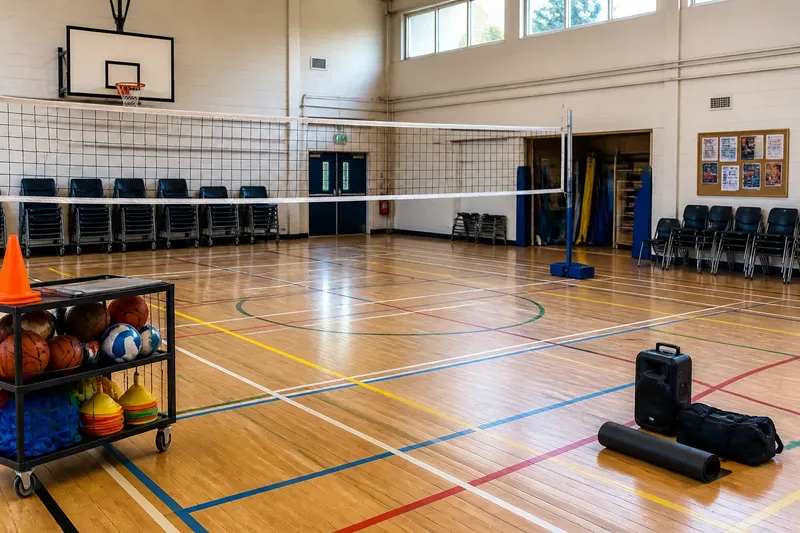
A hoop at one end does not make every session a basketball game. A portable net can divide the floor for volleyball or badminton; folding chairs can turn an open court into a meeting room. Some activities need a clear floor, while others need tables, sound equipment, or a place for an audience.
This flexibility depends on transitions. Groups move equipment, leave walkways clear, and put the room back in an agreed arrangement. Storage carts, stacked chairs, and a noticeboard with several kinds of activities can reveal how the space is shared without telling you which group has priority at a given time.
Reading the floor
Several colors of court lines can mark different sports on the same surface. The colors are useful, but they are not a complete guide to how a session works. A volleyball group may use a portable net and a particular set of boundaries; a dance class may ignore the court markings and arrange the floor around a speaker.
Look instead at the physical setup. Nets, cones, chairs, mats, or a cleared central area show what the room is prepared to support. Keep bags and loose equipment out of marked walkways, and follow any posted instructions about entrances, footwear, or storage.
Equipment and transitions
Shared equipment has a life beyond the activity itself. A ball cart or folding table needs a place to live, and each group may have a different process for setting it out and returning it. Those handoffs matter because equipment left in a doorway or an unfamiliar storage area can disrupt the next use of the room.
If you are responsible for a group, identify who handles setup and reset before the activity begins. Check that the equipment belongs to the session, note where it should return, and leave enough open space for the next group to enter. If the facility has staff or an organizer, ask them about unclear storage or room-use rules rather than moving unfamiliar equipment.
Before you use the room
A quick visual check can help you understand the room without treating every visit as a new-group orientation. Use these items to assess the physical space and decide what needs attention:
- Observe whether the entrance and marked walkways are clear; if they are, proceed through the designated route, but if they are blocked, use another posted entrance or ask facility staff for direction.
- Observe which equipment is already set out; if it matches your activity, leave it in place, but if it does not, ask the responsible organizer before moving it.
- Observe whether the floor is wet, cluttered, or otherwise unsuitable for the planned activity; if it is clear and dry, use the intended area, but if not, pause and notify staff instead of starting there.
- Observe whether chairs, tables, or nets occupy the area you need; if the setup fits, work around it, but if it does not, confirm who may rearrange it before changing the room.
- Observe whether posted notices specify footwear, storage, or access rules; if they cover your planned use, follow them, but if a rule is unclear or absent, check with staff before assuming.
- Observe whether the room is already occupied by another group; if your reserved or permitted use is clear, respect its boundaries, but if uses appear to conflict, ask the facility contact to resolve the arrangement.
Say you are helping set up a community dance session, and you find a portable volleyball net across the center of the court, chairs stacked by the wall, and a clear walkway to the door. First, check the session notice and confirm with the organizer that the court is available and the net is not reserved for another group. Then ask who is allowed to move it, and help place it in the designated storage area only after receiving that direction. Arrange the chairs along the wall if the organizer approves, keeping the walkway open. The expected result is a clear dance area with the net accounted for; if the organizer cannot confirm where the net belongs, leave it in place and ask facility staff rather than guessing.
What does the room tell you?
Can a gymnasium host non-sport activities?
Yes. A shared gymnasium may be arranged for dance, a meeting, a class, or a community event. The furniture and equipment in the room indicate what the current activity needs, while the facility’s schedule determines which use is authorized.
Why are multiple court lines painted?
Different markings can accommodate more than one sport on the same floor. Follow the activity’s setup and the organizer’s directions rather than assuming that one color always identifies the active court.
Who should move shared equipment?
Follow the facility’s rules and the direction of the person responsible for the session. If nobody can confirm where an item belongs, leave it where it is and ask staff rather than risking damage or disrupting another group.
What makes a shared room easier to use?
Clear walkways, visible instructions, and equipment returned to its proper storage area make the room easier to share. These practical details help each activity begin and leave the space ready for whoever uses it next.
Care between sessions
The value of a neighbourhood gymnasium lies in more than the activities it can hold. Its shared character becomes visible in how groups protect the floor, keep routes clear, and leave equipment ready for the next authorized use. If you are planning a visit or organizing a session, check the facility’s posted room rules and ask staff about anything that affects safe access or setup.
When considering a neighbourhood gymnasium, look for evidence of an orderly handoff: equipment has a designated home, room changes leave clear paths, and people know whom to ask about the space. Those details help you judge whether the room can support your activity without disrupting the one before or after it.